
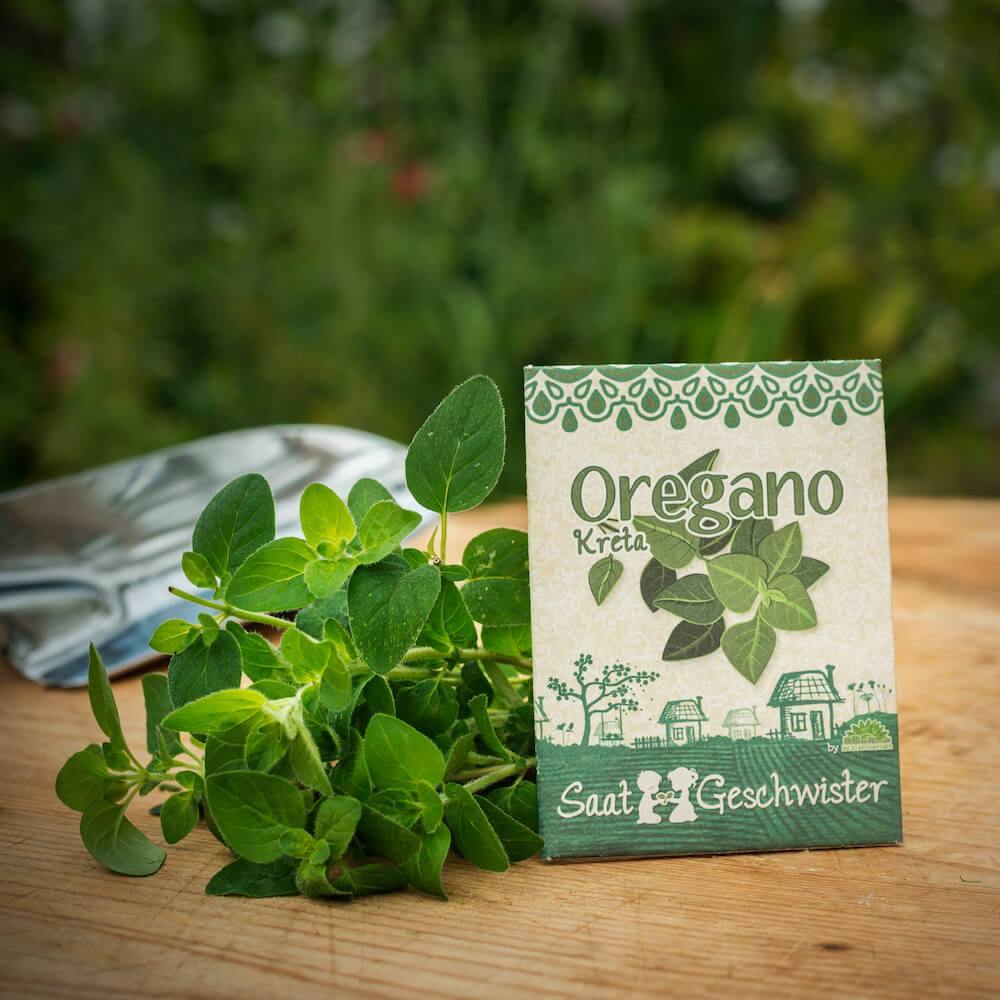

Seeds - Oregano
Derived from Greek, oregano means "joy of the mountains." The complexity of its interplay of aromas makes it not only unique, but also very seductive. Its fruity acidity, a slightly bitter roasted note, and its warm, sweet spiciness are unmistakable. It harmonizes equally well with fruity vegetables, roasted meat and fish, as well as with tangy treats like olives, mozzarella, and feta cheese. This makes oregano the pizza herb par excellence.
Properties
| Plant information | |
|---|---|
| year-round | |
| low feeder | |
| Origanum hirtum | |
| 25-30cm | |
| perennial | |
| Green | |
| Culinary herb for seasoning dishes. | |
Planting instructions on the envelope
Oregano is perennial and prefers to grow in loose, humus-rich soil. It prefers a sunny location. Waterlogging must be avoided at all costs, and regular pruning helps maintain its strong aroma. It reaches a height of 30-50 cm.

Detailed planting instructions: Oregano "Crete"
There is a culinary herb from the Lamiaceae family that tends to divide opinion, at least in German cuisine. While oregano is used almost exclusively in Mediterranean countries like Italy, Spain, and Greece for dishes with tomatoes, casseroles, pasta sauces, meat, and fish, hobby chefs in our latitudes lag a bit behind in their use of this herb. Why, actually? The special aroma is what gives some dishes their sophistication. A lasagna or a pizza without oregano – also known as wild marjoram – is hard to imagine. And honestly: of course, these are not originally German dishes. But we eat them at least as often as the Italians themselves. Don't you?
Plenty of light and little water
If your mouth is watering now, you'd better not waste any time. After reading these few lines, you will be able to pick and use home-grown oregano yourself in just a few months. Or dry it. The herb retains its great taste even then. But one thing at a time. First, pre-cultivation begins around the end of January or early February. To do this, place the oregano seeds on moistened soil in a pot and press them down slightly. Do not cover with soil, as oregano is a light-dependent germinator that does not grow without daylight.
Use a soil that is loose and does not compact as a substrate. Regular garden soil is fine. Loosen the soil further with sand or small pebbles; clay powder helps the soil retain watering. However, waterlogging must be avoided. After less than a week, you should have the first seedlings, and they will continue to grow quite quickly. During the entire cultivation phase, i.e., until harvest, oregano only needs moderately moist soil. You should only water again once the top layer of soil has become dry. Oregano is accustomed to periods of low rainfall from its original home in the Mediterranean region. But it is also accustomed to plenty of sun.
Off into the bed
Harvest time – and then?
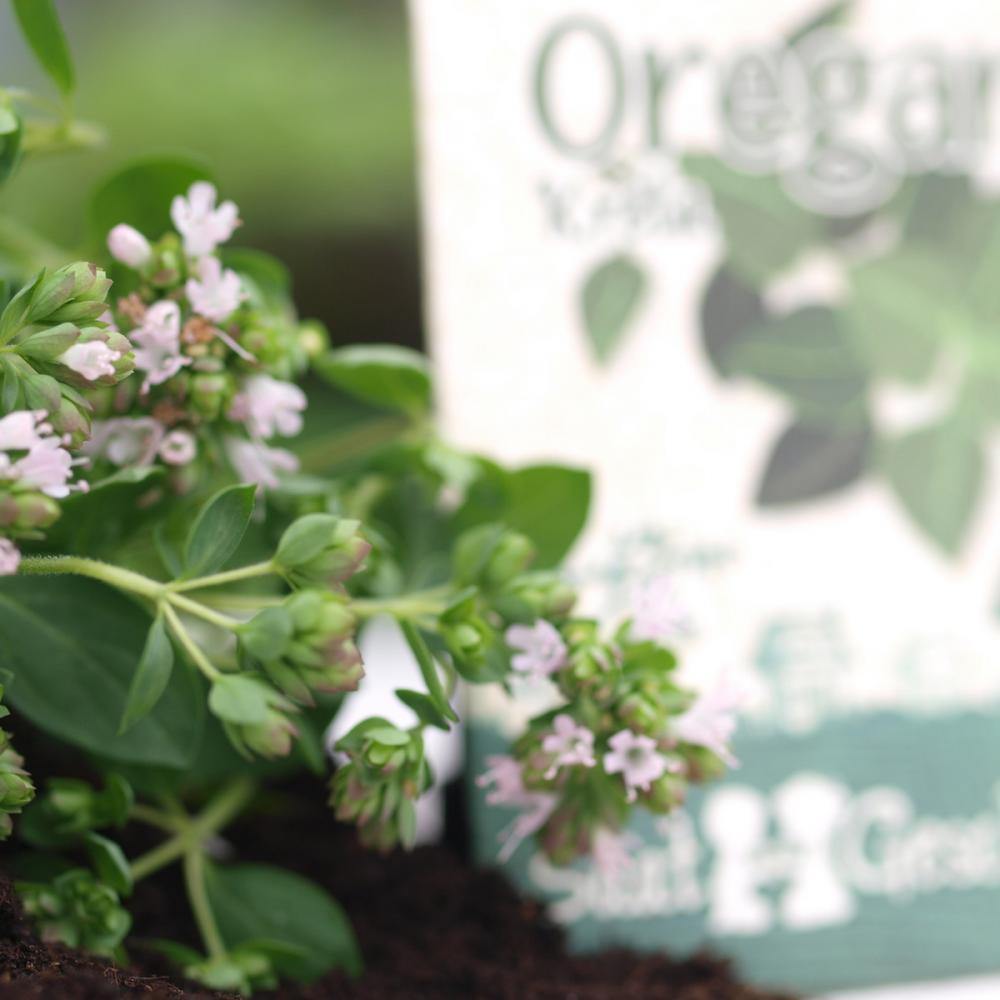
It is advisable to harvest the oregano when it is in bloom, i.e., from about July to September. You can use the herb fresh, dried, or frozen. In all cases, washing beforehand is required. It is best to pick the stalk and leaves completely. To get them ready for next year, you should cut them back completely immediately after harvesting, down to two or three centimeters above the ground.
As for overwintering, we have already mentioned that oregano is frost-resistant. However, it does not hurt the plants in the bed if you mulch them, i.e., pile up organic material around them. Brushwood, leaves, bark mulch, or sawdust are best suited for this. If you have grown the oregano in a pot, it is a good idea to bring the containers inside over the winter. The limited volume of pot soil also means a limited amount of nutrients, which are usually completely consumed by the plant's growth. So, bring the pots into the house and fertilize the soil a bit. Otherwise, have fun with this versatile food enhancer!
When the first truly warming rays of sunshine arrive in April and the seedlings are five to ten centimeters high, oregano loves for you to prick it out, i.e., transplant it into individual pots. Place the pots in the sun for a few hours at midday. After all, the oregano needs to get used to the outdoors. It is actually hardy – but not as a seedling. You can let the herb overwinter outside in the bed without worry in the coming cold seasons. Speaking of the bed: that's where it goes when it is permanently warm, i.e., in May. Furthermore, the young plants are now robust enough to survive even if it gets colder again. Otherwise, it goes without saying that this culinary herb loves it warm. It does come from southern climes, after all. When transplanting into the bed, you only need to ensure that the spacing between the rampant plants is around 25 centimeters; if there is room, even more is fine. The oregano is already used to the garden soil from the pot. If you absolutely do not want to transplant it: stay calm and leave it in the pot. While it will never reach its maximum size of up to half a meter there, it will still bear plenty of leaves.