

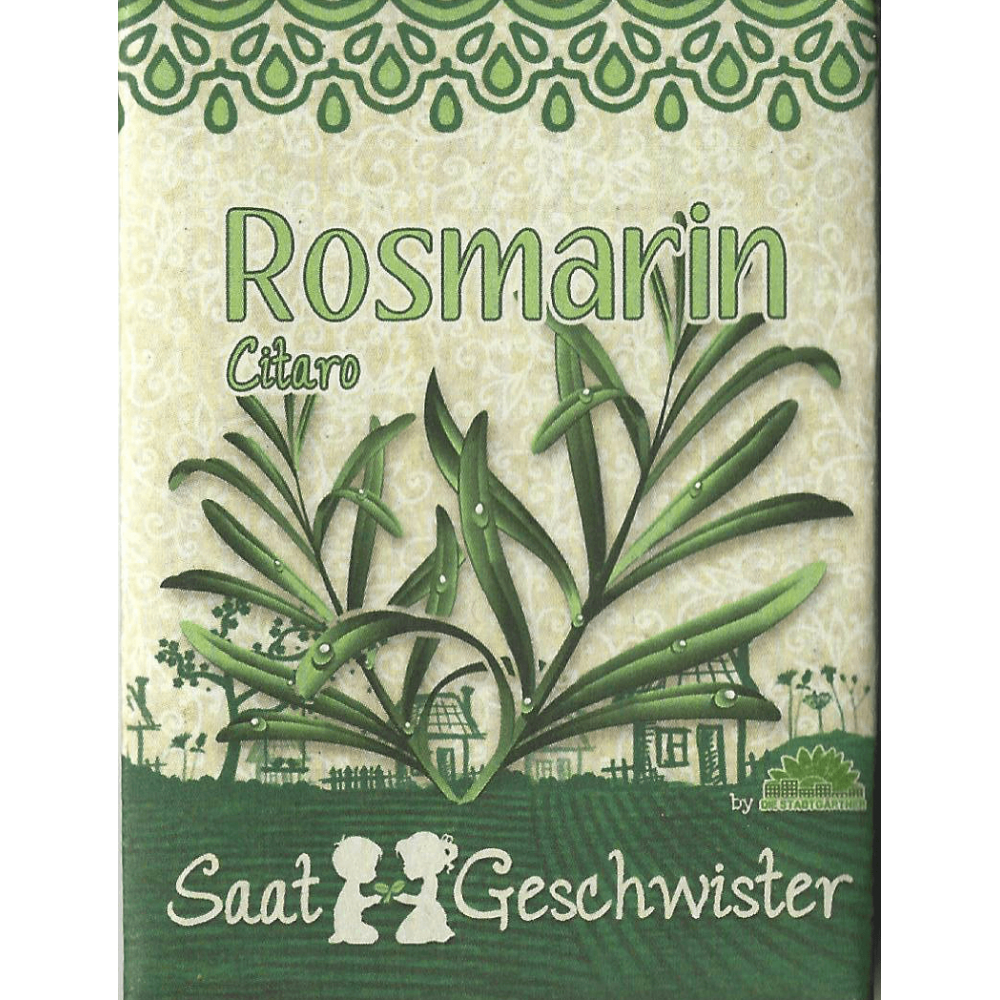
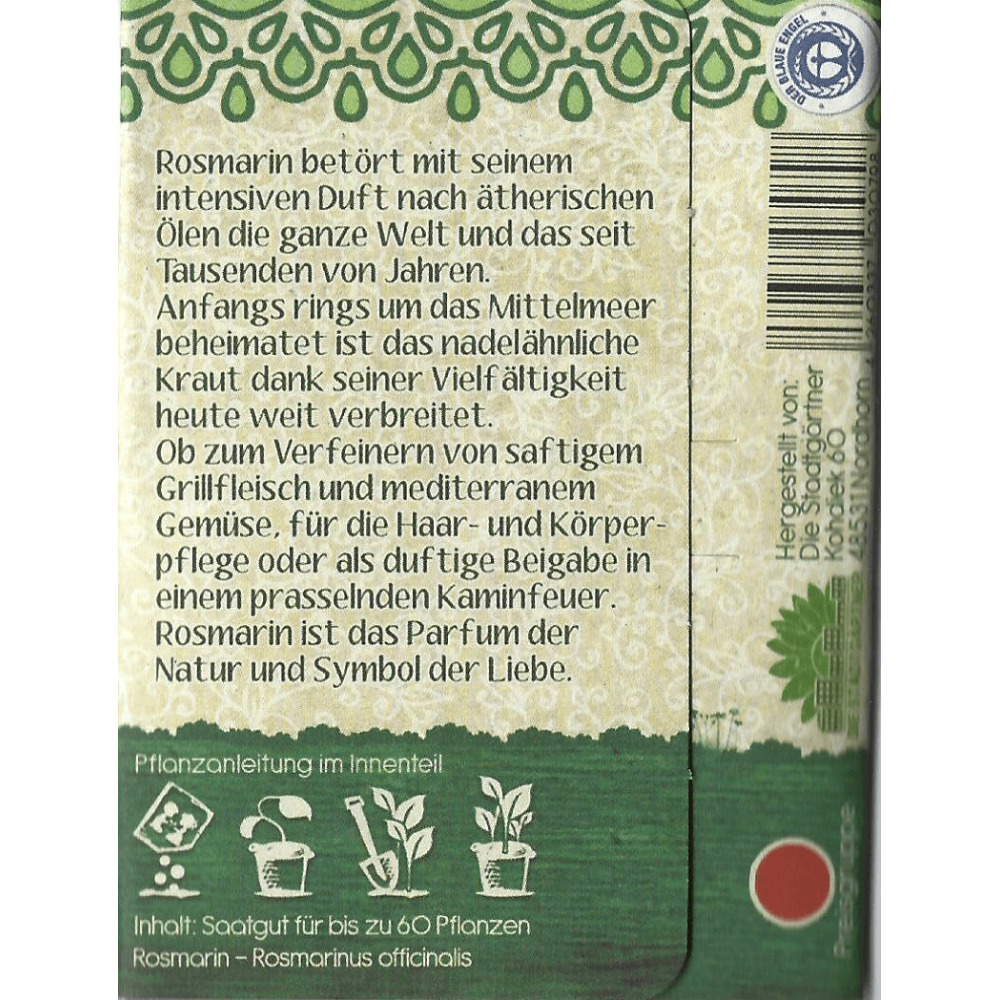
For thousands of years, rosemary has captivated the whole world with its intense scent of essential oils. Originally native to the Mediterranean region, the needle-like herb is now widespread thanks to its versatility. Whether used to refine juicy grilled meat and Mediterranean vegetables, for hair and body care, or as a fragrant addition to a crackling fireplace, rosemary is nature's perfume and a symbol of love.
Characteristics
| Plant information | |
|---|---|
| year-round | |
| Low feeder | |
| Rosmarinus officinalis | |
| 30 - 50 cm | |
| perennial | |
| Green | |
| Culinary herb for seasoning food. | |
Planting instructions on the envelope
In the spring, between March and April, rosemary can be pre-grown in small pots on a warm windowsill. It is advisable to mix some sand into the nutrient-poor potting soil and to be sure to water sparingly to create conditions similar to the Mediterranean region. Rosemary requires patience due to its slow growth. From the end of May, the young plants can be moved outdoors, ideally into planting pots, so that nothing stands in the way of a move to winter quarters later. The fresh leaves can be harvested all year round; pruning in autumn is strongly discouraged.

Detailed planting instructions: Rosemary "Citaro"
The kitchens of Italy, France, Greece, and Spain would be much poorer if Rosmarinus officinalis – its botanical name – did not exist. Whether pasta, fish, meat, or anything with tomatoes or other vegetables, the food would likely still be good, but just not as delicious as it is with rosemary. You can safely say that without overstating things. As you have already noticed: in the home of rosemary, it is a bit warmer than here. Does that mean in return that rosemary likes it sunny and warm? You could say so – although there are also breeds that are hardy.
Dryness and sun
These are still the best ingredients if you want to bring in a good harvest. Paired with lean and preferably calcareous soil, you will generally achieve the best yields. You should definitely not use fertilizer, even if you sow the rosemary in April. A windbreak is not to be underestimated, especially if you sow in a place that can be exposed to cold winds from the north and east. But why sow early? Isn't it still quite cold at night in April? That is correct on one hand. But on the other hand, rosemary simply needs some time to make itself comfortable in the bed, i.e., to take deep root. But the delicious herb needs that too, because it gets everything it needs from the soil.
Water only after a long dry spell
You don't need to overdo the watering either. Above all, the leaves must remain dry when you water the plant, otherwise there is a risk of rot. Only if it has been dry for a long time do you need to help out a little with water. You also don't need to take special care of this wonderful kitchen herb; it is enough to prune rosemary regularly, specifically by trimming the entire shoot back to a single green sprout. This prevents the plant from becoming heavily woody.
Easy harvesting and tips for overwintering
As you as an expert have surely noticed: pruning in this case means harvesting. Of course, it may happen that you harvest more rosemary than you need. That is not a problem, however, because rosemary also tastes wonderful in its dried state. So whatever you cannot use fresh, you simply dry.
Because rosemary is also popular for home growing here, there are now varieties that are quite hardy. You can simply leave these outside in winter, though not in the first few years when the plants are still smaller and more delicate. Provide these with good winter protection, and even the younger specimens should have no difficulty getting through the cold season. A cover that keeps the snow away is the least you can do. If you are not sure whether the rosemary is robust enough to overwinter outside, then repot it and bring it into the house, where it will enjoy a bright but rather cool place.
